

Welcome to Mercantile Mayhem! Thank you for caring about the survival of independent businesses in New York City. Imagine if our streets were lined with a sordid mixture of Sweetgreens, Chipotles, bank ATMs and bank cafes? (Yes, they exist, I wrote about it here.) It’s challenging to own an independent business in this wildly expensive city, whether it’s tariffs, rent, or general death-by-a-thousand-cuts costs. Thankfully there are many people who need to be their own boss, from street vendors and startup founders, to packaged food makers and designers, so hopefully these independent businesses in New York City will survive. While I usually zero in on NYC-based businesses, this edition of Mercantile Mayhem does feature some visiting entrepreneurs, as they are non-corporate, non-chain entities, who happen to be doing business in our fair city.
THE FINNISH AI INVASION CONTINUES!
They’re baaaa-aaack! I first met the CallCompany crew from Finland back in September when they visited New York City looking for clients and investment. CallCompany is an AI driven reservation/phone agent startup for restaurants, co-founded by Niko Vartanen, Nuutti Räisänen and Matias Myhrberg. Last week, the trio (there is actually a fourth, holding down the fort in Finland) attended Nordic AI Night at Google’s Pier 57 last week with none other than Frederik Berselius, the chef/owner of Aska in Brooklyn, yes, with 2 Michelin stars.
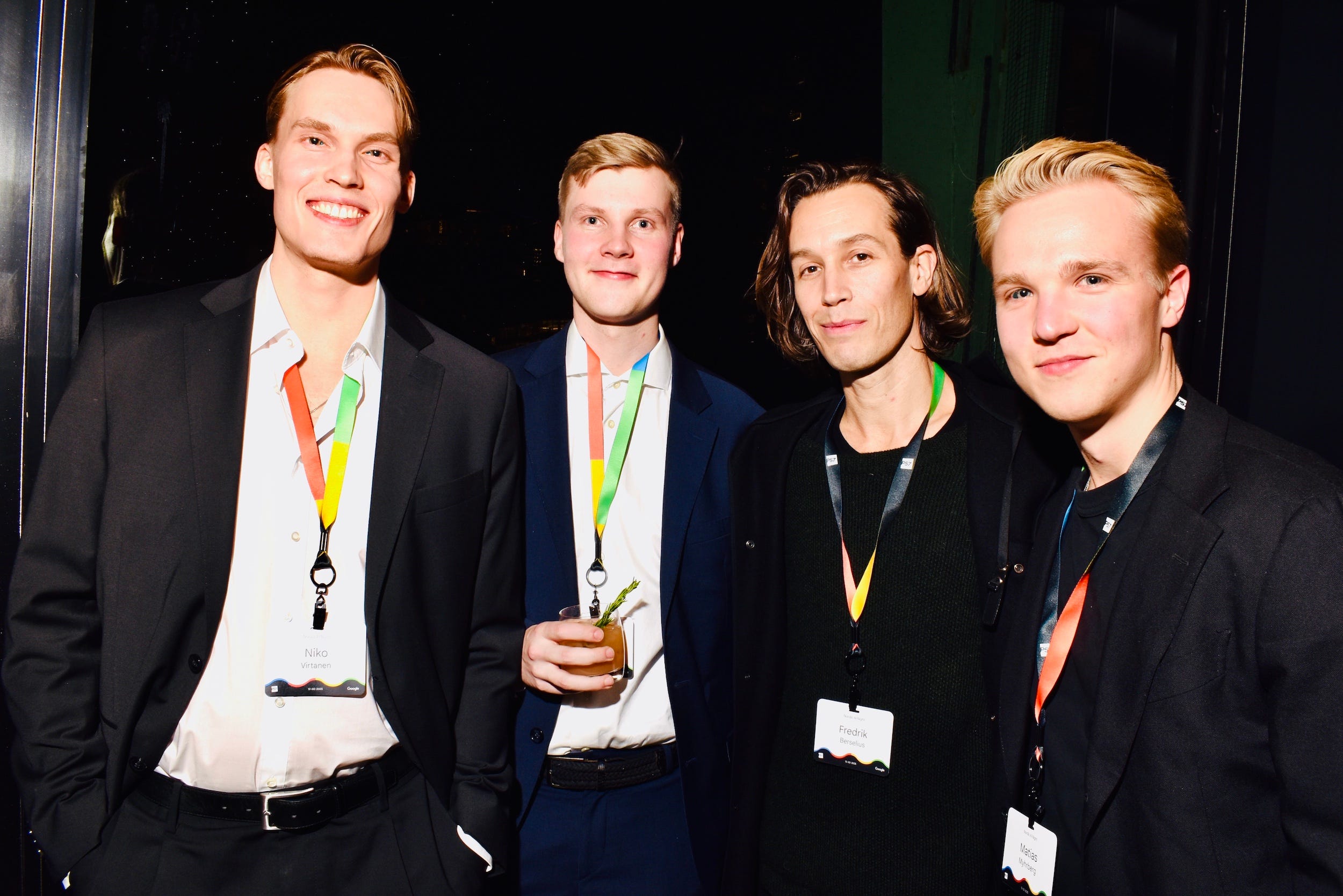
Finland was in the talo (house) or “talossa” so to speak, at Nordic AI Night, which was hosted by Borenius and Fenwick, organized by Tero Kuittinen. The reason Chef Berselius was in attendance with the CallCompany crew is because Aska will be using CallCompany’s reservation/phone agent services.
If you need a trigger warning for the acronym “AI” because many AI companies scrape the internet and steal copyrighted texts and images, or because of the ominous predictions about AI not just destroying jobs, but entire sectors, or the obscene wealth, concentrated power, pro-Kremlin stances and increased sociopathic tendencies of the tech oligarchs, do not worry, this is a safe space. No need to recoil into the fetal position, you can continue reading this CallCompany story.
CallCompany won’t take anyone’s job, because the job—answering restaurants’ phones for reservations or field customer questions, hasn’t really existed for many years. Restaurants often use Resy or OpenTable for reservations, and don’t answer the phone, if they even have a phone.
According to one of the CallCompany co-founder’s social media posts, during their New York City sojourn (before the magnificent opening of Helene Schjerfbeck exhibition at The Metropolitan, also a celebration for Finland’s 108th Independence Day 🇫🇮) they exhibited some real sisu on our streets.
The trio figured if they can get restaurants like Aska among others by meeting face to face, why not try and raise money the same way? So they set up a very simple cardboard stand with a CallCompany sign on the sidewalk of Billionaires’ Row and pitched to strangers. They have some follow up meetings scheduled! We shall see what happens because they are planning another visit to New York City in the future.
STARTUP CPG’S PARTY AT HUNGRYROOT
The tagline for Startup CPG, a massive community founded Daniel Scharff for independent consumer packaged goods businesses, is, “We do big things for the small guys.” Startup CPG has scores of free events across the US, geared primarily for emerging brands with packaged products on the healthier side. Not only do events bring founders and store buyers together, but there are also newsletters, directories, a slack channel and webinars, among other resources, also for free.
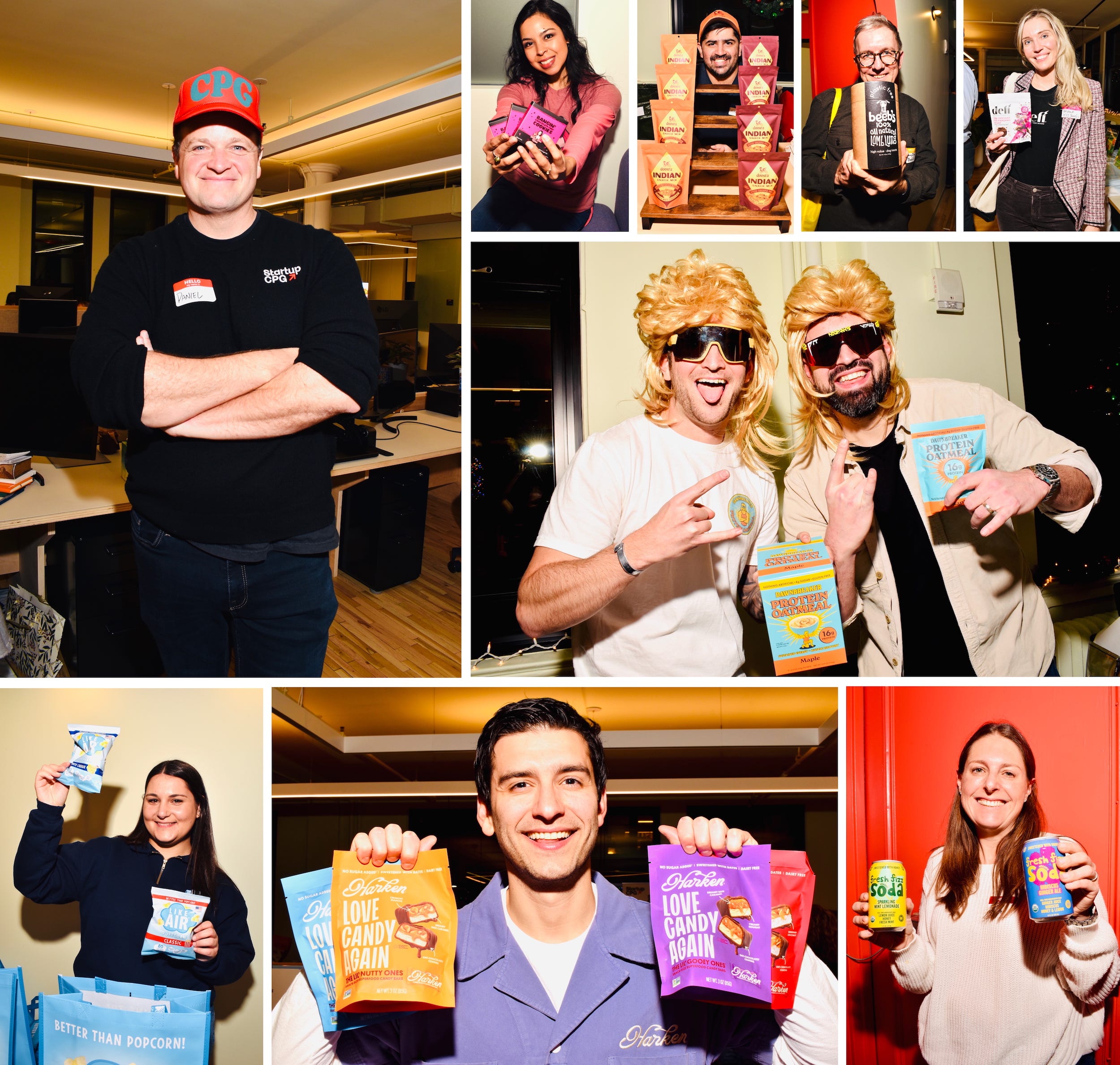
I attended a Startup CPG party at the office of Hungryroot last night, a specialized grocery delivery business. Scharff donned his holiday red and green “CPG” baseball hat and made introductions between buyers and sellers, or any other pairing that might be mutually beneficial.
I took a few photos, tried samples, chitchatted with founders. Many of the products feature protein, a trendy ingredient, others are vegan, or gluten-free, sugar-free, sometimes all of the above. Which historically equals bland flavors and eating air, in my experience, but these founders have some great tricks up their sleeves because I would never know these products are on the healthier side—I mean that as a compliment.
Which leads me to…
POSITIVE TRAJECTORY FOR INDEPENDENT CPG BRANDS
Between San Francisco, CA, suing conglomerates over ultra-processed foods and the stats in a Wall Street Journal video presented by Xavier Martinez about about independent vs corporate packaged foods, is positive news for independent CPG companies.
Healthier packaged snacks, beverages and foods made by independent startups and entrepreneurs (scores of them live and work right here in New York City) are gaining popularity over legacy (Kraft Heinz, General Mills) brands’ somewhat dismal offerings. According to Martinez, these smaller independent brands make up only 2% of the packaged foods market, but drove 1/3 of the sector’s sales growth in 2024.
In addition, while the S&P climbed approximately 75% over the past three years, big food corporations’ stocks (Pepsi Co, General Mills, among others) have all dropped over the same time period.
But wait, what about private label? How does private label (when stores have their own brand) factor into the CPG sector? Phil Lampart aka Supermarket Guru, wrote a 2025 recap report in Food Trade News that notes a strong private label trend. He also writes about the impact of ICE raids, the Gen Z inspired “No Buy” and “De-Influencing” movements (one of my favorite Instagram accounts is about de-influencing) and Ozempic, among other factors, on the grocery sector.
WELCOME TO CHINATOWN’S HOLIDAY MARKET ON CANAL STREET
I have to underscore once again how easy and convenient it is to buy from independent businesses this time of year, especially for gifts. There are holiday markets galore all over the city that sell unique, stylish or delicious goods, not hideous Christmas-themed-future-landfill.
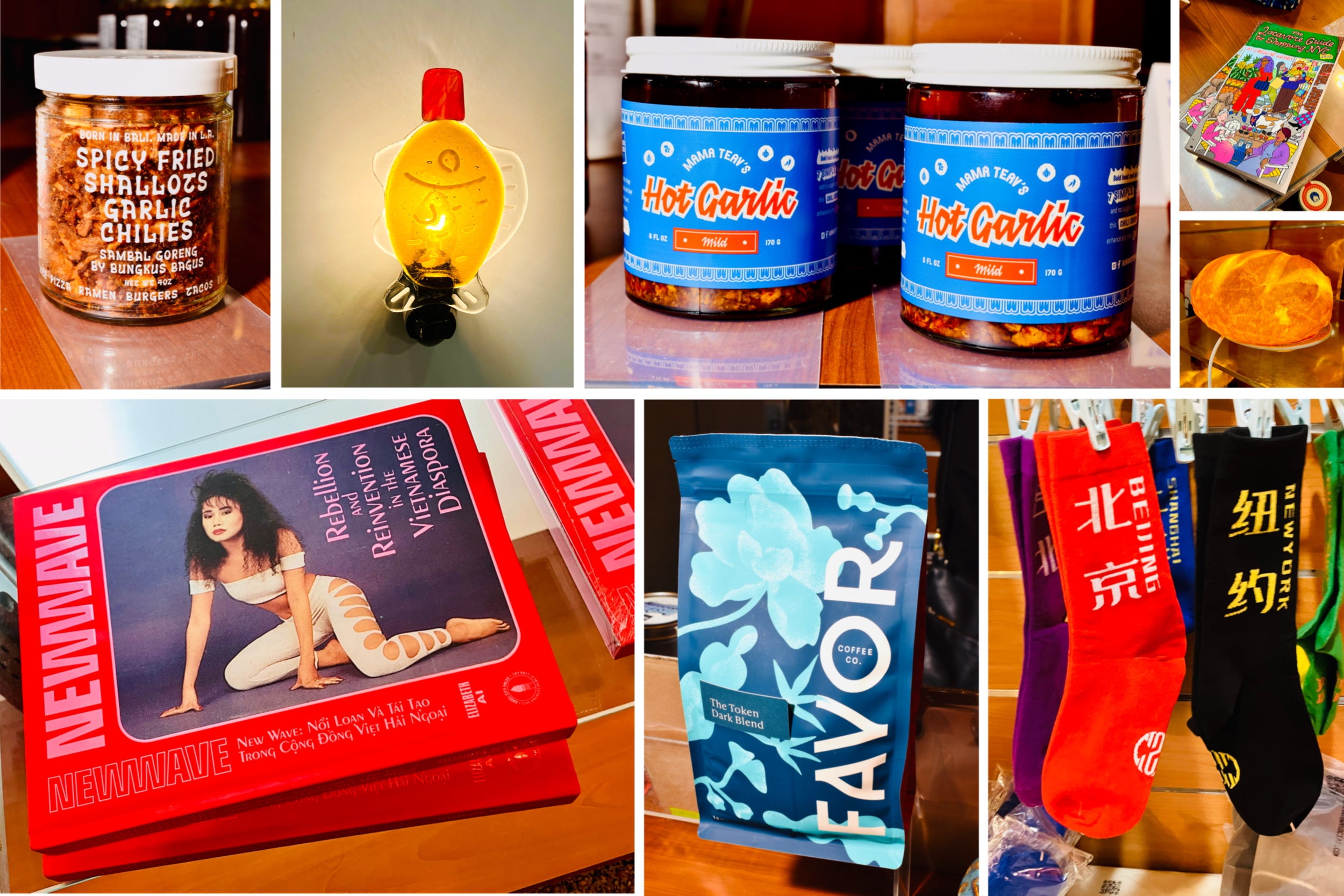
I went to Welcome to Chinatown’s Holiday Market on Canal Street inside Kam Man Market and found an array of edible items, apparel, accessories, books, including books for kids and homewares. This market is happening two more weekends, Dec 12 - 14 and Dec 19 - 21, this is the calendar.
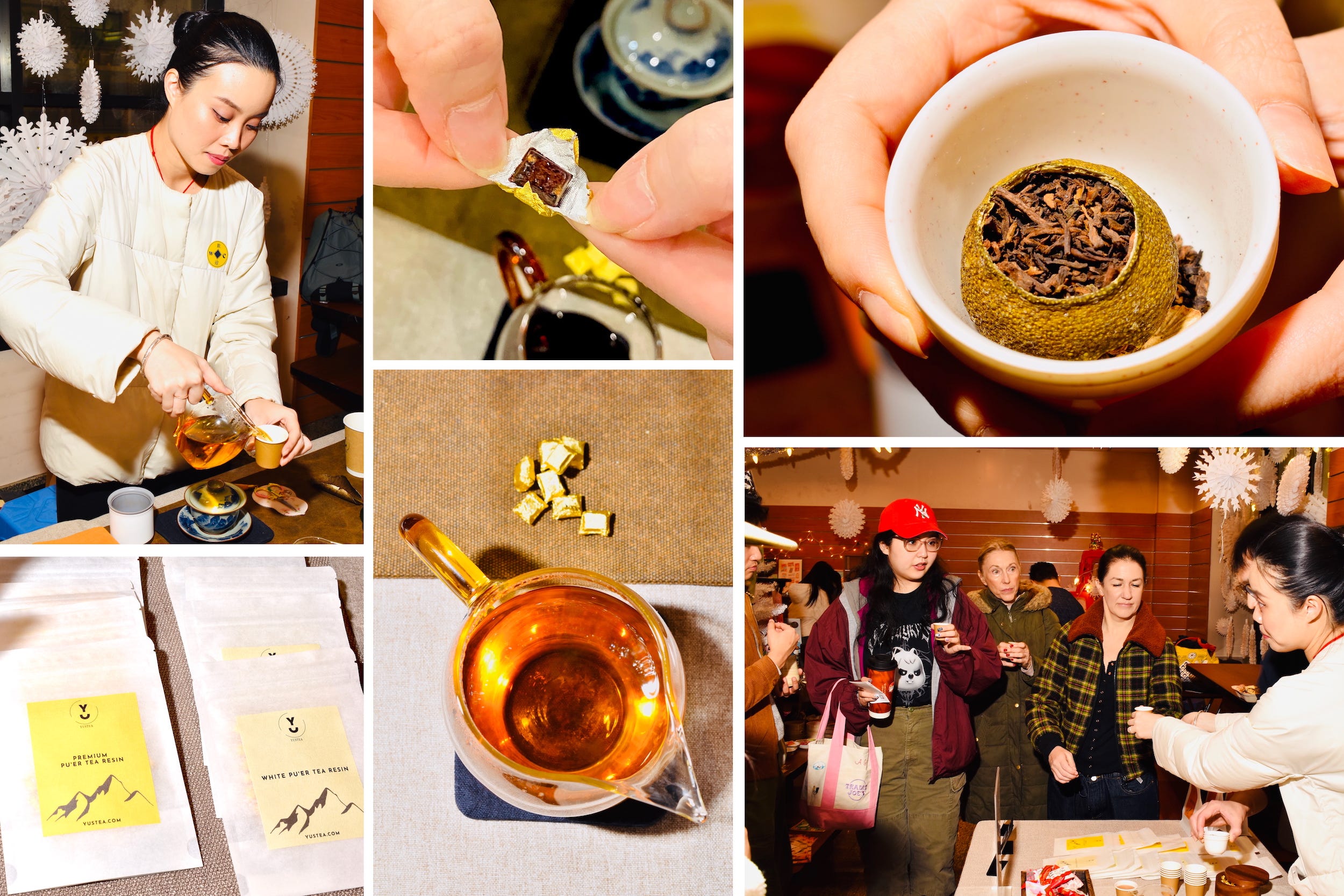
I had the good fortunate to visit the market during Yu’s Tea pop-up, featuring Pu’er tea from her hometown of Pu’er, in Yunnan province. Yu gave samples to try, they were wonderful with no bitterness. Her tea is made from tiny squares of tea resin wrapped in foil that dissolve in hot water. The resin is made from a dried tea soup or tea paste of sorts, this approach to tea making was invented and perfected by her uncle, a tea scientist. There was also some loose leaf orange tea, but instead of being packaged in a sachet, it was inside a tiny dried orange.
TWO PALESTINIAN OLIVE OILS FROM THE WEST BANK
There are two relatively new Palestinian extra virgin olive oils in the US market, Huwa and Ya Albi, both sourced from the West Bank, each made by extended families living in the US and the West Bank. I always notice package design and both Huwa and Ya Albi have exquisite packaging, although entirely different from each other. And taste? Outstanding! Phenomenal! I love very peppery olive oil, a burning throat is an olive oil success story in my book, and they both have a peppery taste. (I’m not going to go into the subtle differences, I think you just need to try them, but don’t worry, your uvula will not get scorched.)
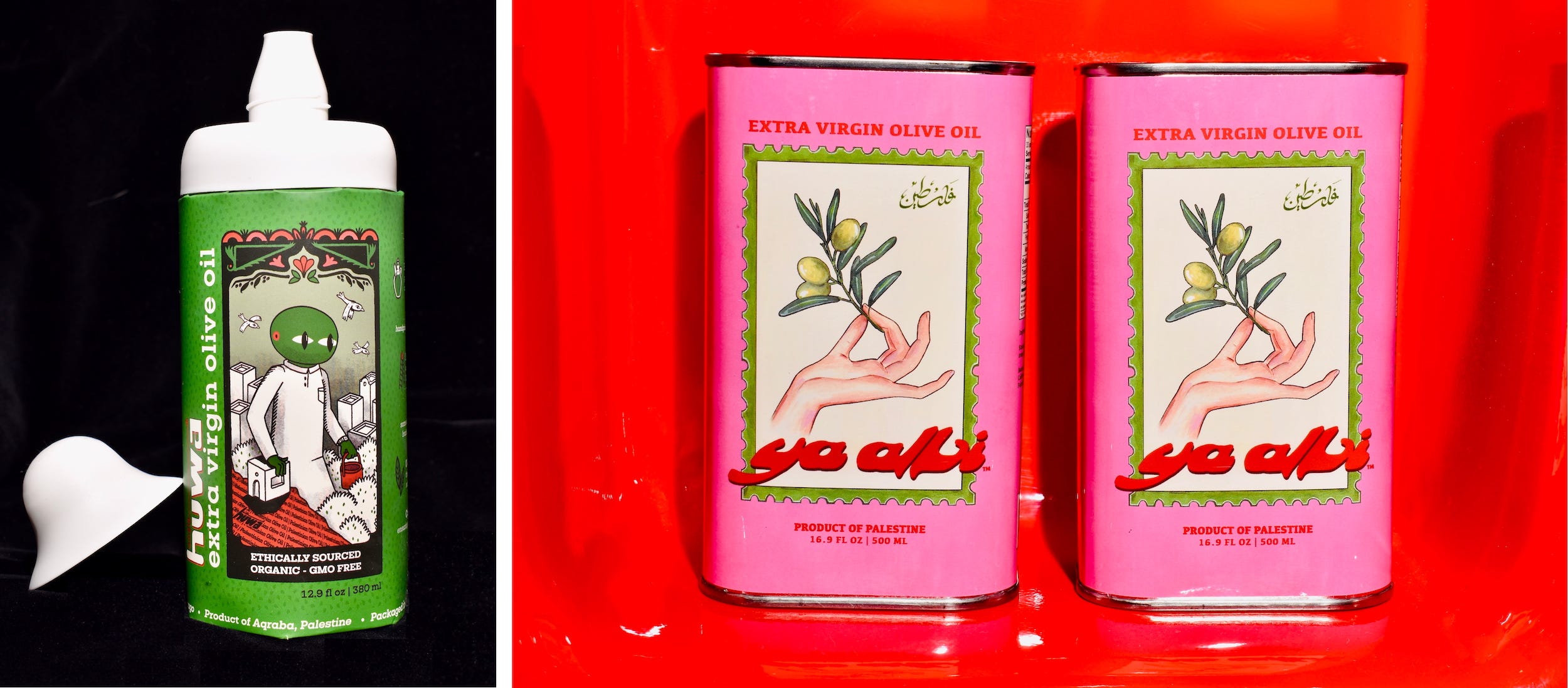
Huwa is based in Chicago, the Huwaoushi family sources olives from the family farm in Aqraba, south of Nablas. They hand pick and harvest the olives using the same techniques the long family line of olive farmers have used for centuries. No chemical fertilizer are used and the trees are GMO-free.
Ya Albi, which means “my heart” in Arabic, is based in Los Angeles, founded by Yasmeen “Meena” Abouremeleh and her mom Suzanne. The olives are from Turmus Ayya in the West Bank. Ya Albi had a pop-up in Kotn’s LES location along with Ya Habibi Market last weekend, I was delighted to attend. I met Meena, who grew up visiting family frequently in the West Bank and East Jerusalem, who also designs merch galore.
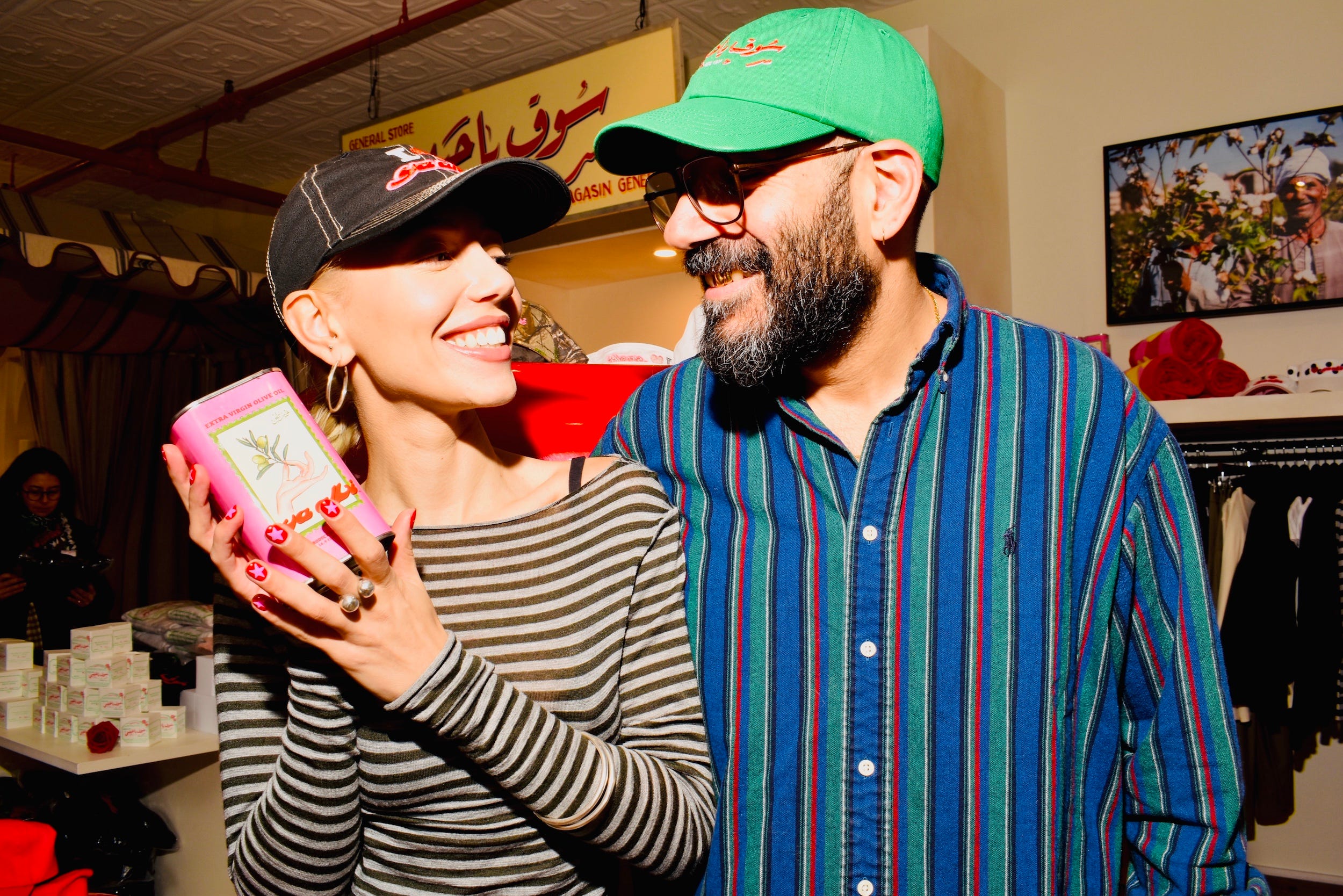
Note: due to the wildly popular pop-up the usual size tins of olive oil are sold out, but smaller sizes will be available soon, and plenty of great merch remains in stock in one of my favorite color combos, red and pink.
It would be ridiculous to write about West Bank-rooted businesses operating in the US, outside the context of politics, human rights and settlements. Since I’ve never stepped foot in the region, have no lineage there, don’t speak Arabic and/or Hebrew, don’t know each historical fact dating back to the primordial ooze, I feel unqualified to write in depth about what is happening. However, I do read, research and interview people. This Guardian article by Jason Burke and Sufian Taha describes the horrendous predicament of olive farmers in the West Bank and olive farming stats compiled by the UN can be found here. In addition, one of the best books I’ve read about the West Bank is A Day in the Life of Abed Salama by Nathan Thrall, which won the Pulitzer in 2024 for general nonfinction.
CORPORATE INTERESTS, DEMOCRACY AND THE RULE OF LAW
This article Americans Won’t Have Faith in the Rule of Law Until the Law Works for Them (gift) by Seth Frotman and David Seligman is about why many people in the US have lost faith in the legal system that isn’t fighting against corporate corruption and monopolies. (I miss Lina Khan, the former Chair of the FTC, among others, like Alvaro Bedoya, also ex-FTC.)
“For too many Americans, the economy has become an unaffordable racket in which corporate interests seem always to have their way. This increases the disaffection that many Americans have with our democracy and the rule of law. It is hard to blame people for losing faith in a legal system that has allowed the powerful to trample their rights with impunity.”
It was published in the New York Times on December 1, 2025, before the Netflix bid for Warner Bros and subsequent Paramount hostile takeover bid. The layers of corruption of the Paramount bid, one of them being Jared Kushner’s questionable role, are highlighted in this Reuters article.
LOCAVORE’S SHOPS OF NYC TRADING CARDS
Osmo insisted in making a video that highlights the Locavore’s Shops of NYC Trading Cards, please have a look. I mentioned the trading cards in a previous Mercantile Mayhem newsletter, so I’ll be brief. I was thrilled Locavore’s founder Caroline Weaver hired me to photograph all 100 shops for the trading cards! The brilliant trading card concept is hers and the jubilant illustrations are by Clara Kirpatrick.
MAMDANI’S SMALL BIZ TRANSITION TEAM, CON’T
Last week I wrote about Mamdani’s small business transition team, two people had no bios. I wrote that I’d try to find out their details. I contacted the Mamdani team, they have yet to get back to me, I will try other research means.
Thank you to Mercantile Mayhem’s sponsor Accompany Capital. Based in New York City, Accompany Capital, a CDFI, helps immigrants and refugees with loans and free financial services. Please read about it here.

Thank you to Small Business Majority, Mercantile Mayhem’s sponsor. Small Business Majority supports and empowers small businesses across the US with a focus on public policy. Please read about the organization here and visit their finance resource platform Venturize.

MERCANTILE MAYHEM SPONSORSHIP
I am still looking for one additional sponsor, three in total. This individual, business, organization or foundation must believe that independent businesses in New York City need to survive and thrive. Do you want a city full of just Chipotles, Starbucks and bank ATMs? No! Do you value the character that independent businesses bring to New York City? Yes!
If you would like to know Mercantile Mayhem sponsorship rates and newsletter stats (open rates and such) please email me: ninarobertsnyc@gmail.com and I’ll send you the details. Please forward this newsletter to others.
OPPORTUNITIES GALORE
The Keeling Curve Prize is a prize given to people working on projects that address climate change, sustainability and advancing decarbonization efforts. Ten winners will be awarded $50,000 each to scale their projects. Due date is January 15, 2026, however there is a cap on applicants when they have received 500.
WomensNet offers a number of grants to women-owned businesses on a rolling basis, peruse grant information here.
Start Small Think Big is an organization that pairs experts with small business owners for free to share their expertise. I usually list specific workshops, but there are so many in the near future, you can peruse them here.
Welcome to Chinatown still has an open call for their Test Thursday program. The program allows emerging food and beverage brands to test out their serving operations and products, click here for more information.
I love your colorful writing with head spinning amount of information.
Fantastic roundup, as always!