

Welcome to another Mercantile Mayhem, my newsletter about the survival of independent businesses in New York City. Let’s get right to it—a new Eritrean-Ethiopian restaurant in Sunnyside, Queens.
MAKINA CAFE OPENS IN SUNNYSIDE, QUEENS
Have you seen the yellow Makina truck zooming around the city, en route to serve Eritrean-Ethiopian dishes like chicken or beef tibs, collard greens or lentils? Better yet, have you tried the food dispensed from said truck or the Makina location on Governors Island?
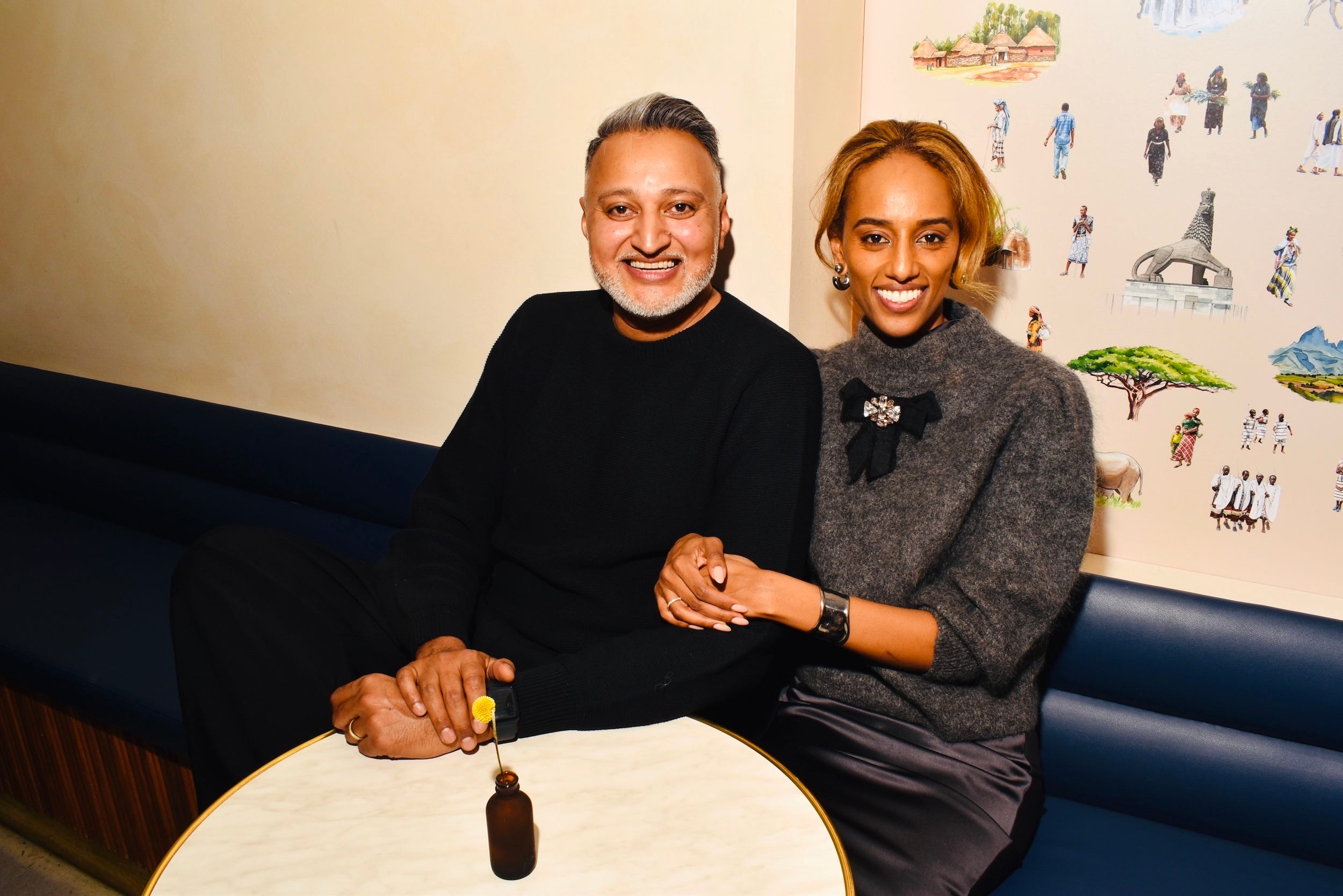
Whether you have or haven’t, you can now enjoy Eden G. Egziabher’s outstanding Eritrean-Ethiopian food in a gorgeous, warm, welcoming restaurant in Sunnyside, Queens. The new Makina Cafe features Eritrean-Ethiopian cuisine, with a sprinkling of Italian influences, both in the food and decor.
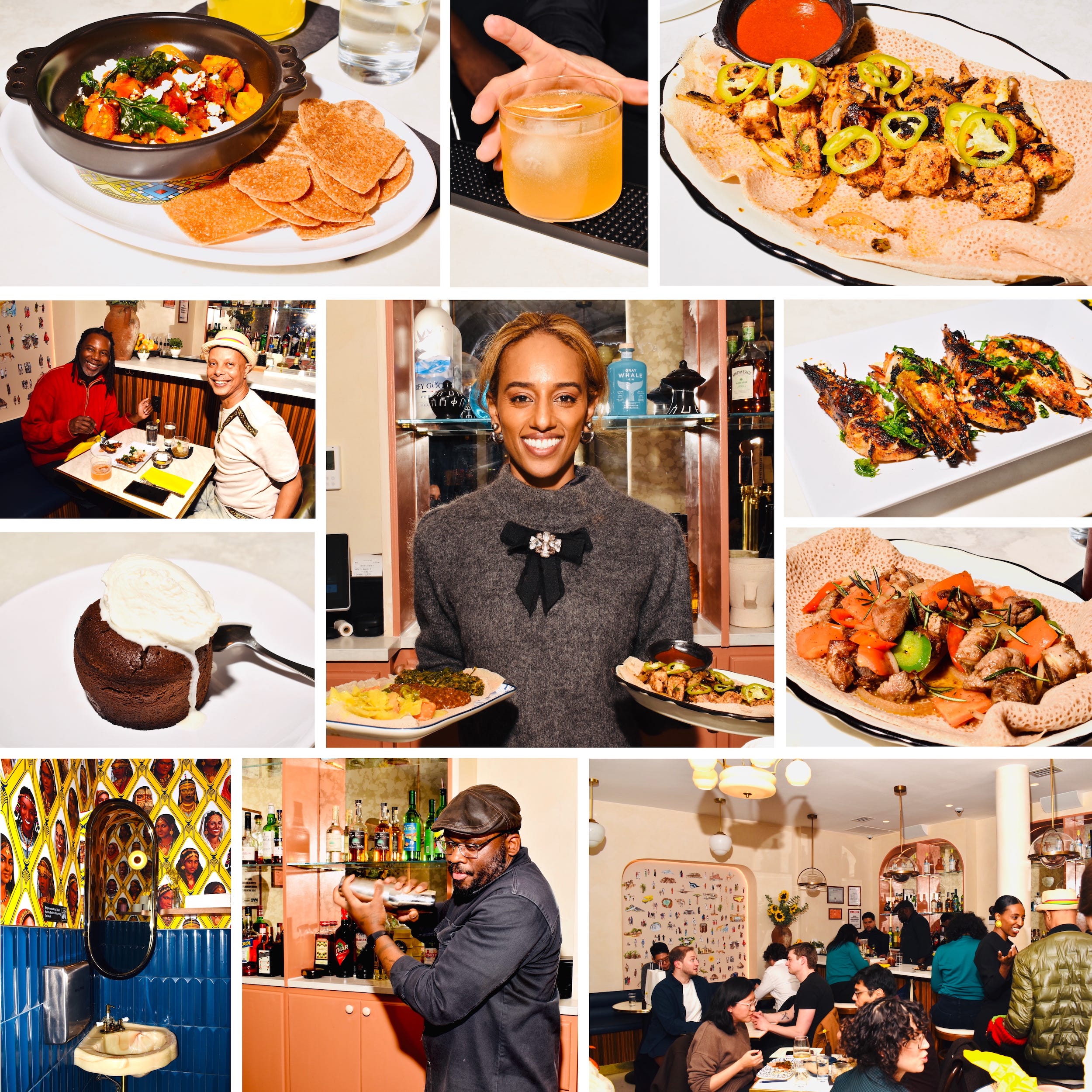
Makina Cafe officially opened last Friday, I was lucky enough to attend the first soft opening night, full with friends, family and neighborhood people. I went solo but soon made friends with my dining mates at the bar to the left and right. I hope I didn’t annoy them too much being “that person” photographing my plates of food along with theirs, using a flash.
I ordered chicken tibs served on injera bread with a heathy dose of fresh chili peppers and berbere sauce, the diner to my left’s starter was a gorgeous deconstructed injera bruschetta and to my right, a platter of plant based wonders that included spiced red lentils, turmeric cabbage braised greens among other vegetables. We split the chocolate molten cake and tiramisu (lots of Italian influence in Eritrean cuisine) for dessert. I highly recommend a visit, it’s open Wednesday to Sundays for dinners. PS They have the best bathroom in the city.
THE SURVIVAL OF ARTISTS AND CREATIVE WORKERS IN NEW YORK CITY: A NEW REPORT
The Center for an Urban Future recently published a comprehensive report called Creative New York about New York City’s affordability for creative people and the institutions/venues that support them. It’s fairly bleak, but no surprise for creative people who have been eking out a living here for decades. Nonetheless the stats are alarming.
The report includes all types of creative fields, from dance and the visual arts, to the film industry and design. Since the start of the pandemic, the number of fashion designers in the city is down 28.9%, film and video editors down 18.5%, graphic designers 13.8% and art directors 6% according to the report. If you like perusing stats and data, you will appreciate the depth and breadth of this report, read it in full here. Let’s hope the future of New York City will include artists and those in creative fields who provide cultural and economic benefits to the city.
THEY’VE ‘GONE FULL LOUIS XV’
Are billionaires completely out of touch? According to this (gift) New York Times opinion essay, “The Billionaires Have Gone Full Louis XV,” yes, they have burrowed themselves into cozy little bubbles. The humorous yet frightening essay, written by Michael Hirschorn who is chief executive of Ish Entertainment and illuminates how some billionaires seem to be off their rockers, or perhaps just greedy, and making a big splash about it.
STARTUP CPG’S FIRST FOUNDERS & FUNDERS ONE-DAY SPECTACLE
Last week Startup CPG held a frenetic (in the best way) Founders & Funders event centered on 10-minute meetings between CPG (consumer packaged goods) founders and investors.
The all day event was abuzz with a sea of branded merch, swinging lanyards (free band name idea: The Swinging Lanyards) tables of edible/drinkable samples and multiple panel discussions. It filled three huge rooms spanning two floors that overlooked Broadway just north of Union Square. According to Startup CPG, 160+ independent brands were in attendance (chosen from 500+ that applied to the event) bringing heaps of crunchy chips, canned beverages, frozen pizza, cookies, bars, sauces, condiments, crackers, freeze dried fruits, yogurts and labneh to be sampled, changing at hourly intervals.
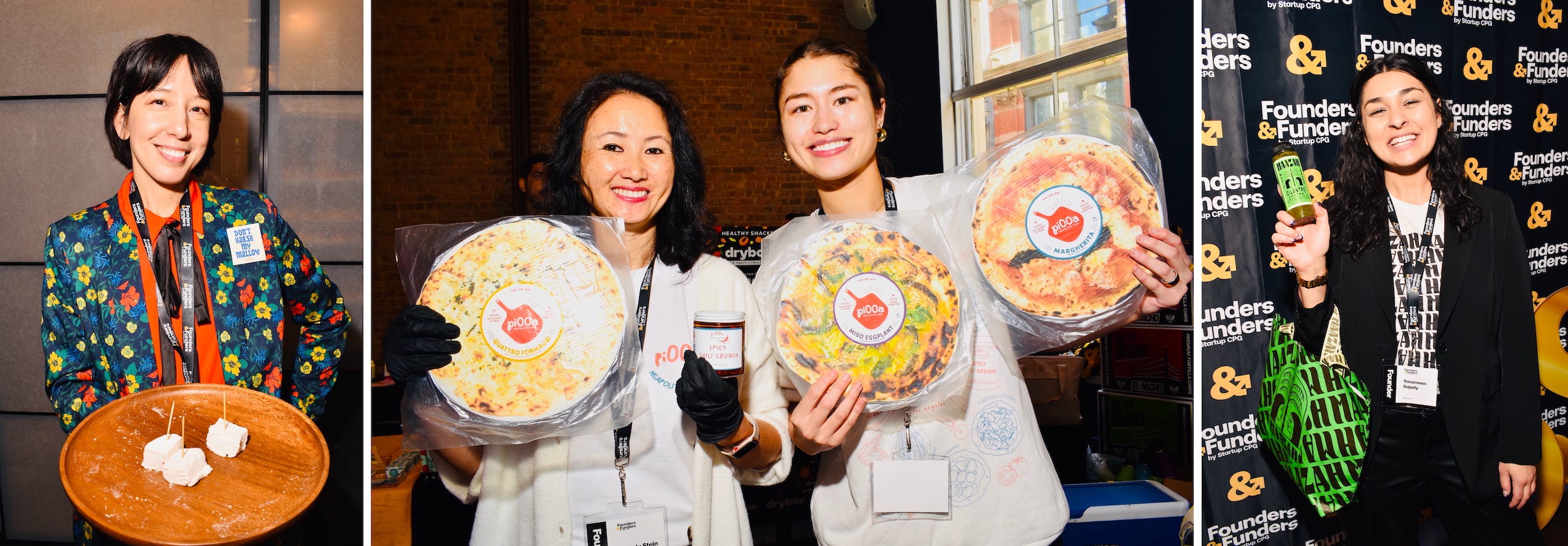
The main event for those in attendance was the one-on-one, ten minute meetings between prospective founders and the 65+ investors. In the designated meeting room, pairs of founders and investors met and chatted at small tables almost in a “speed dating” type format. Meetings had been initiated by the investors prior to the event after reading materials on founders’ businesses.
A countdown clock was projected on a screen and a bell rang at ten minutes to signal the meetings were over. Some founders that I spoke with had one or two scheduled meetings with interested investors, others had five or six, likely contingent on the stage of the business. If they sold at one or two local markets versus nationwide through Whole Foods.
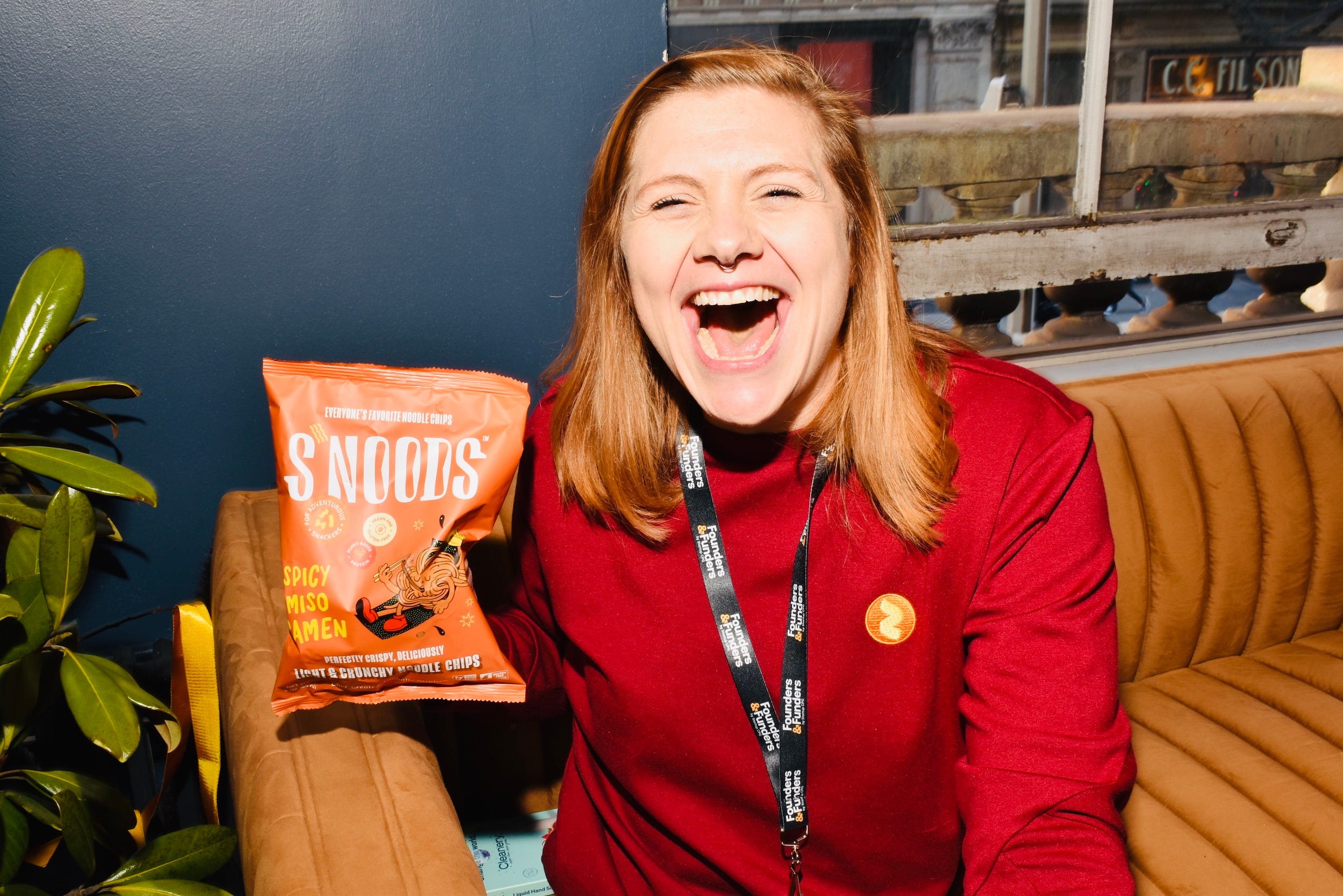
Startup CPG estimates that 600 scheduled one-on-one meetings took place, but there were plenty of impromptu meetings between founders and investors who bumped into each other on the stairway, while sampling goods, at one of the panel discussions or at the end of the day pizza party.
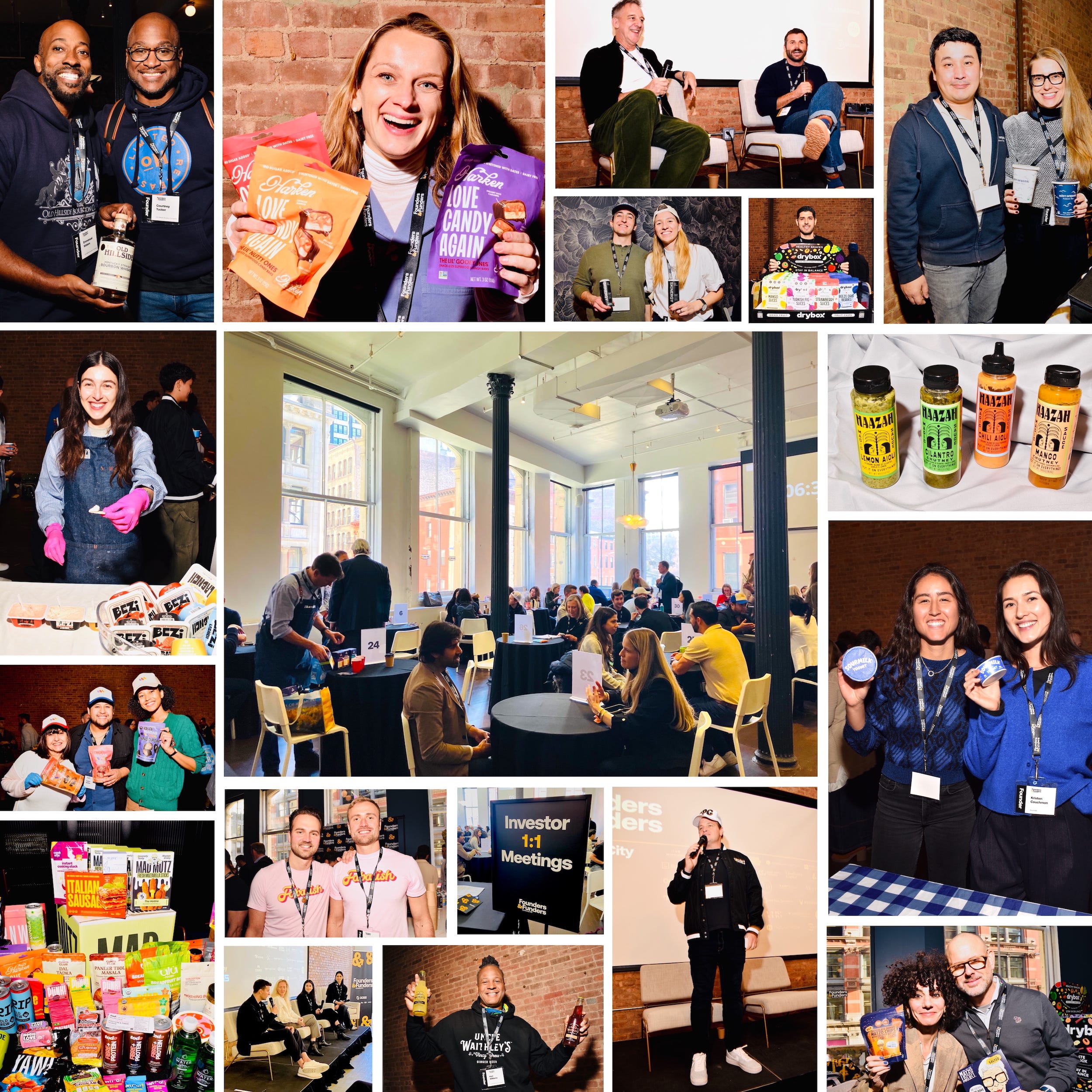
Startup CPG is a CPG community founded by Daniel Scharff, geared for CPG founders and adjacent businesses. It provides resources, all free (there was a nominal fee for the businesses who applied to this event) for emerging CPG brands.
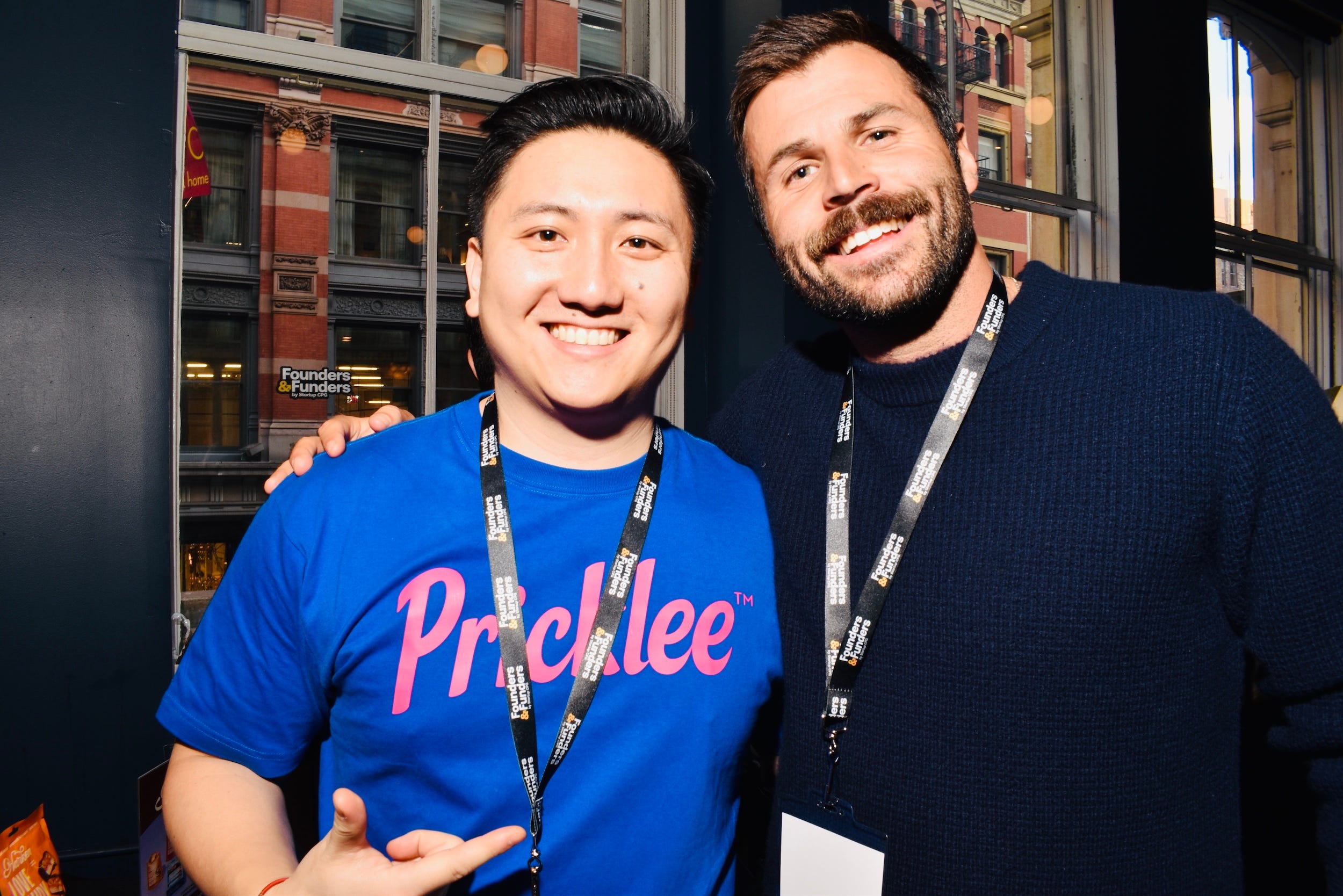
I’ve reported on independent CPG brands over the years, I’m surprised to find continued, even growing, interest in launching CPG brands. I thought the surge of CPG brands launched by individuals or small businesses was a pandemic-inspired trend, as people were stuck at home and could finally make and market that jam all their friends love and restaurants needed another revenue stream—until realizing CPGs are often a financially challenging and all consuming path. But I was wrong, I have been seeing more small, emerging CPG brands recently, founded by both individuals and established companies, trying to break into mainstream grocery stores.
ALLEVA TO RE-OPEN, BUT NOT IN LITTLE ITALY
Alleva, the beloved Italian cheese, grocery and sandwich store will return to New York City after closing in March 2023 after falling behind on rent during the pandemic. Alleva had inhabited the corner of Mulberry and Grand Streets space since opening in 1892. But adding insult to injury, the building had to be torn down in 2024 after a wall collapsed caused by an unpermitted gut renovation in the building. According to a Time Out article, Karen King will re-open Alleva in the Chelsea Market in late winter with Chef Danny Paolucci overseeing the food.
THE NEW BOOK CAPITAL EVOLUTION EXAMINES CAPITALISM’S LATEST ITERATION
There’s a new book in town, Capital Evolution: The New American Economy by journalist Elizabeth MacBride and investor Seth Levine tackling the little ol’ subject of capitalism. The book examines the current transitional phase of capitalism—is it “late-stage”? Or “post-late-stage”? Maybe “techno-feudalism”? While it’s difficult to name periods or epochs in real time, MacBride and Levine call this stage of capitalism “dynamic capitalism.”

Full disclosure, I have not read Capital Evolution yet, but plan on it. I recently listened to Shubha K. Chakravarthy interview MacBride and Levine, which I recommend if you want to get an idea what Capital Evolution covers.
ILSR’S MEMO TO MAMDANI: HOW NEW YORK CITY CAN LOWER COSTS
The ILSR (Institute for Local Self Reliance) has a few suggestions for NYC’s incoming mayor, Zohran Mamdani, on how to tackle rising costs. The memo’s main message is “reclaiming control from distant corporations and rebuilding local self-reliance.” It covers: energy, the financial sector, groceries, internet access, pharmacies and local healthcare access, small business and waste/composting. While all these issues are interconnected, the suggestions for groceries and small businesses caught my eye and are relevant to Mercantile Mayhem.
Groceries: maybe I’m an official cranky older person now with no hope or vision 😂, but I think city-owned and -run grocery stores, which Mamdani campaigned on and ILSR supports, would be challenging, wildly expensive and wouldn’t even guarantee cheap groceries in food deserts. [Editorial update: ILSR has clarified that the optimal role of government is not running grocery stores, but rather the city owning the building and covering expenses like utilities. The grocery store would be run by a local operator, perhaps a nonprofit, a cooperative or the private sector.]
However, I am in total agreement with ILSR about the Consumer Grocery Pricing Fairness Act. It would “prohibit suppliers from engaging in unfair price discrimination against independent retailers." Meaning, suppliers have to sell goods at the same price to small, independent grocery stores as to big box stores. This would allow independent grocery stores to open and compete with the colossal chains.
Small Business: while Mamdani campaigned on reducing fees and streamlining city bureaucracy that often hampers small businesses, it’s not nearly enough to help small businesses survive, especially in retail. The ILSR’s Memo to Mamdani suggests…
“Enact commercial tenant protections and fair lease renewal standards.” The Small Business Jobs Survival Act (SBJSA) was close, but it basically floundered and died.
“Enable small businesses to own their spaces.” ILSR gives Philadelphia’s Kensington Corridor Trust as an example.
“Expand the supply of small, affordable commercial spaces.” LISR suggests imposing a vacancy tax on empty storefronts, such as the passage of New York Senate Bill S6804 and rezoning for small footprint enterprises. [Note: see the first listing in my “opportunities galore” section below, not a longterm, sustainable solution, but a step in the right direction!]
“Adopt policies that direct more of the city’s procurement spending to local small businesses.” ILSR suggests getting quotes from at least three local small businesses for city purchases between $32,000 - $250,000.
“Ban dynamic pricing in city contracts, restrict Amazon purchases, and create transparency.” Read ILSR’s report on that here.
“Create an E-commerce platform for New York City’s residents and local businesses.”
“Make small business voices a standing part of city governance.”
“Strengthen partnerships with community-based small business organizations.”
I think these are excellent suggestions, some have been tried before in some form, but New York City is ruled by the real estate sector, which can be savage. (I make the distinction between landlords who own one or two buildings and developer/private equity conglomerate landlords.)
FOUNDERS WHO LIKE TO DEMO
In the basement of the Union Square Whole Foods, Karim Khalil, founder of Yaza Labneh (which is getting a snazzy rebrand in 2026) gave out samples last week. I often run into people who give out samples in stores, called “in-store demos” in supermarket parlance. Initially, I assumed it was hired help—sometimes it is—but often it’s the founders themselves. They enjoy talking to customers, they make sales and its invaluable market research.
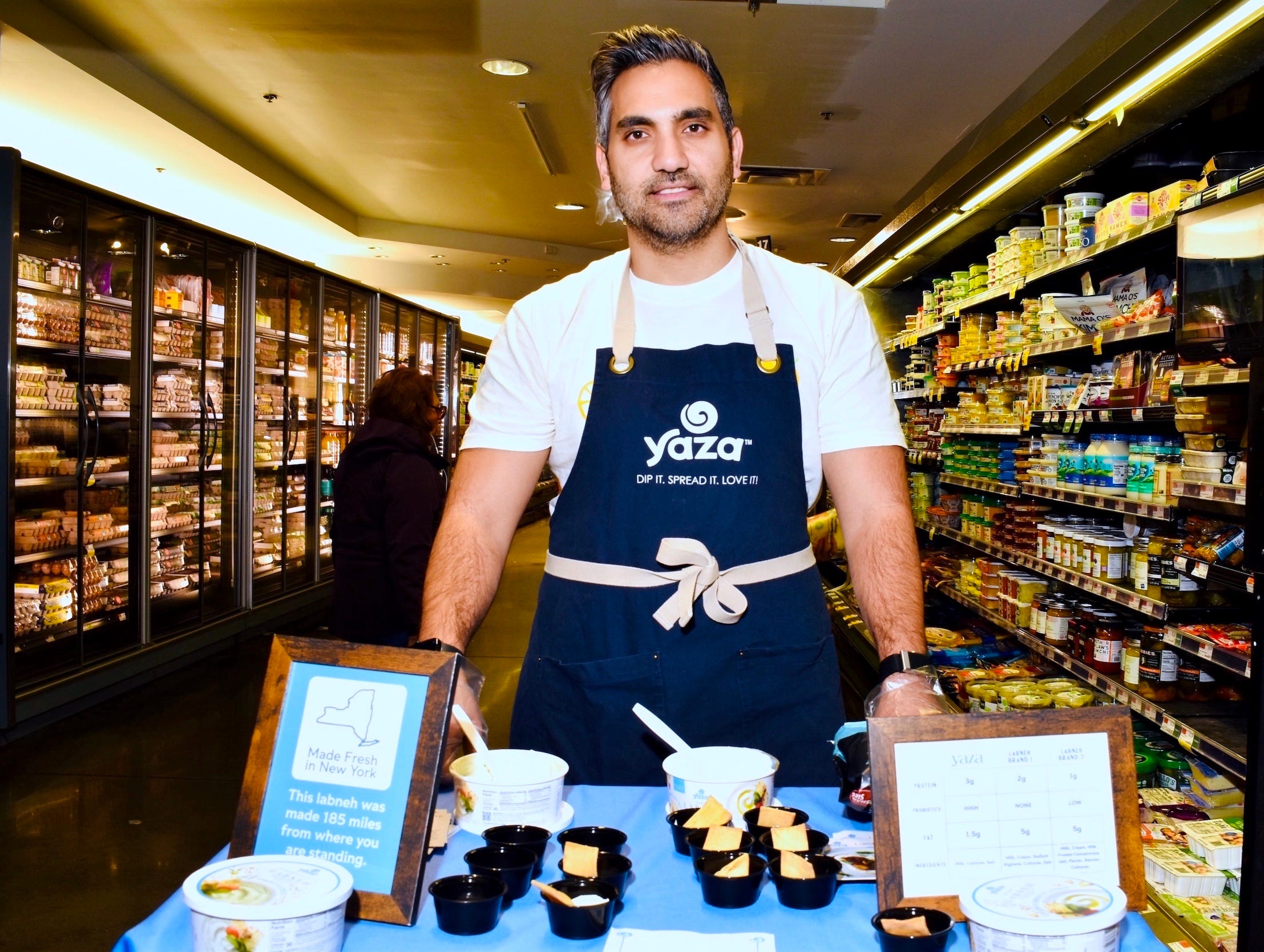
During the half hour I was there chatting with Khalil—and of course sampling the creamy labneh made Upstate—I found it fascinating how many people know what labneh is, unlike years ago when the general public had never heard of labneh. It’s also fascinating to see who is game to try samples (I always do!) and who is not. Unlike the conglomerates churning out Old El Paso Taco Kits or Twinkies, small brands have a human founder with small teams that oversee every aspect of a product’s evolution, from concept to sitting on grocery store shelves.
Thank you to Mercantile Mayhem’s sponsor Accompany Capital. Based in New York City, Accompany Capital, a CDFI, helps NYC micro and small businesses with loans and free financial services. Please read about it here.

Thank you to Small Business Majority, Mercantile Mayhem’s sponsor. Small Business Majority supports and empowers small businesses across the US with a focus on public policy. Please read about the organization here and visit their finance resource platform Venturize.

MERCANTILE MAYHEM SPONSORSHIP
I am still looking for one additional sponsor, three in total. This individual, business, organization or foundation must believe that independent businesses in New York City need to survive and thrive. Do you want a city full of just Chipotles, Starbucks and bank ATMs? No! Do you value the character that independent businesses bring to New York City? Yes!

If you would like to know Mercantile Mayhem sponsorship rates and newsletter stats (open rates and such) please email me: ninarobertsnyc@gmail.com and I’ll send you the details. Please forward this newsletter to others.
OPPORTUNITIES GALORE
The Downtown Alliance is launching ReStore, a new program that offers free, temporary retail space, up to three months, for pop-ups inside empty commercial spaces in lower Manhattan. The program starts May 25, 2026 and runs through September 15, 2026, with possible grants up to $15,000 for fitting out spaces and other expenses. The program is open to entrepreneurs, existing businesses, artists and non-profits, among other people/groups, look here for details and read FAQ here. Applications open on January 12, 2026.
Santander’s Cultivate Small Business is offering a free, 12-week, live virtual program for early stage, food-related entrepreneurs. This program focuses on founders who have been historically underserved, operating in low-to-moderate income neighborhoods. The program includes a curriculum, mentorship and possible capital grants up to $20,000. Cultivate Small Business is accepting applications for their spring cohort, which runs from March - June, deadline is February 2, 2026. There are business requirements, please check here; click here for the application form.
The Keeling Curve Prize is a prize given to people working on projects that address climate change, sustainability and advancing decarbonization efforts. Ten winners will be awarded $50,000 each to scale their projects. Application due date is January 15, 2026, however there is a cap on applicants when they have received 500.
WomensNet offers a number of grants to women-owned businesses on a rolling basis, peruse grant information here.
Start Small Think Big is an organization that pairs experts with small business owners for free to share their expertise. I usually list specific workshops, but there are so many in the near future, you can peruse them here.
Welcome to Chinatown still has an open call for their Test Thursday program. The program allows emerging food and beverage brands to test out their serving operations and products, click here for more information.
As always Nina offers a ton of useful and interesting information in her colorful, friendly manner.